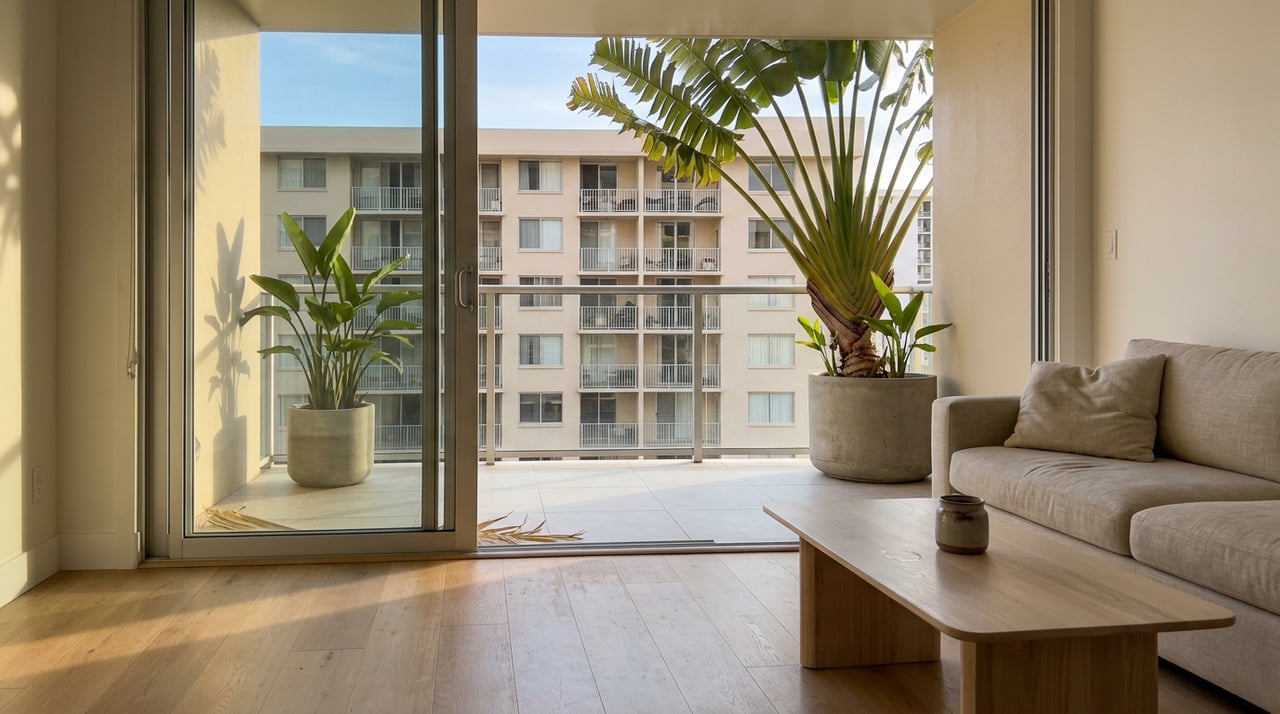
While a 400-Foot Tower Fight Grabs Headlines, Ala Moana's Park Just Runs Its Week
September 17, 2026
September 17, 2026
Walk into a Honolulu City Council hearing about 1588 Ala Moana and you will hear about maximum permitted density, protected view corridors, and community benefit packages measured in the millions. Walk across Ala Moana Boulevard to the park itself on the same afternoon and you will find people doing what they have done for decades: laying out towels near Magic Island, grabbing plate lunch before a swim, checking whether the tennis courts have reopened for the evening. The tower fight consuming Council chambers this month has almost nothing to do with what actually shapes a resident's week at Ala Moana Regional Park. That gap between the headline fight and the daily reality is the story worth telling right now.
Hurricane Lowell pushed storm surge across Oahu's south shore earlier this month, and at Ala Moana Regional Park the damage was immediate. Sand piled up to 30 yards over the park road, thick enough in places that city crews needed heavy equipment just to clear the pavement. The park closed to vehicle traffic on Tuesday, September 8, while joggers and walkers still used the sidewalks on foot.
What happened next says more about this park's place in daily island life than any zoning hearing could. The Department of Parks and Recreation, aided by the Department of Facility Maintenance, had the entire park reopened by 6:45 a.m. on Thursday, September 10, ahead of the timeline city officials had expected. The urgency makes sense once you consider the volume: city officials have said the park sees an average of 11,000 visitors a day, a number that turns a two-day closure into a genuine disruption for thousands of routines, not a minor inconvenience.
That speed matters if you live nearby, because it tells you something about how this particular piece of infrastructure gets treated when it breaks. Compare it to what has not been fixed in the same park for the past seven years.
A five-minute walk from where the storm crews were clearing sand sits McCoy Pavilion, the Mughal-inspired sports pavilion and banyan courtyard built in 1975 in memory of Lester McCoy, the Honolulu Park Board chair who championed the city's early beautification efforts. It closed in 2019 for what officials expected to be a straightforward air conditioning repair. Then deeper structural issues surfaced. Then the pandemic hit and city facilities shut down entirely. Rather than reopen the pavilion for a few months between projects, the city decided to keep it closed until the next phase of work began.
That was seven years ago. A retired lawyer and art historian who lives near the park has called the closure length "crazy," and a longtime leader of the community group that formed to fight earlier redevelopment plans for the park says local organizations that once relied on the space for festivals and gatherings still feel its absence. City officials have said at various points that the pavilion could reopen "next year," including a projection that pointed to 2024 and a later one that pointed to a partial reopening sometime in 2026. Each projection has slipped past its own deadline, even as the roads around the same building got cleared of hurricane debris within 48 hours this month.
The contrast is the point. When the park breaks in a way that threatens public safety or access, the city moves fast. When it comes to a discretionary renovation with no emergency deadline, the timeline stretches for years. If you are weighing how quickly civic infrastructure gets restored near your home, the storm response and the pavilion saga tell two very different stories, and both are true at the same time.
Not everything near the park has been stuck in limbo. Ala Moana Center, directly across the boulevard, has been adding to its food court at a pace that matters if you treat a park afternoon and a mall meal as one trip, which most regulars do. L&L Hawaiian Barbecue opened in the Makai Market Food Court on Street Level 1 this year, adding a familiar plate lunch option to the rotation. Supreme Dumplings, known for handcrafted xiao long bao, opened on Mall Level 2 in the 'Ewa Wing. Cookie Corner expanded with a second location on Mall Level 2 in the Diamond Head Wing, giving the center two spots for the same treats instead of one.
None of these openings will make a real estate listing. They are exactly the kind of small, continuous refresh that makes a well-worn routine feel current rather than stale, and they are the actual texture of what changes for someone who treats this stretch of Ala Moana as a weekly loop rather than a once-a-year visit.
The fight that has generated the most ink this year is 1588 Ala Moana, a proposal from BSC Acquisitions II, an affiliate of the Kobayashi Group and BlackSand Capital, to redevelop the Macy's parking lot at the corner of Atkinson Drive and Ala Moana Boulevard. The plan calls for demolishing the existing parking structure and building a 38-story, 400-foot hotel tower with 294 hotel units alongside a 17-story, 200-foot residential tower with 205 units, plus a five-story podium with commercial and lobby space. The site is currently zoned for a maximum height of just 100 feet, which means the project would need the city to grant significant flexibility to proceed.
In exchange, the developer has offered the city a set of community benefits totaling roughly 6.5 million dollars, including street tree funding and Complete Streets improvements at the busy Atkinson Drive intersection, along with affordable rental units. Critics, including some who testified in writing to the Council, have pointed out that the project would also block a protected mountain view from Magic Island, one of the more distinctive sightlines inside the park itself. The Ala Moana Neighborhood Board chair has said publicly that community benefits should address how people actually live around a development, not simply check a box, and members of a hospitality workers union have protested along Ala Moana Boulevard arguing the trade-offs do not go far enough given the scale of what is being requested.
On September 10, the same day the park fully reopened after the storm, the City Council voted unanimously to grant the developer a 90-day extension to continue the review process. No final decision has been made. Whatever the Council eventually decides, it will not change the park's road access, the food court's current lineup, or when McCoy Pavilion finally reopens. Those are separate timelines running on separate clocks, and conflating them is how a reader ends up thinking a zoning fight is the same thing as a change to daily park life. It is not.
Some things at Ala Moana have kept a steady rhythm regardless of what is happening in Council chambers. The Hilton Hawaiian Village fireworks show has run every Friday night since 1988, and Magic Island remains one of the quieter, less crowded spots to watch it without fighting for space on Waikiki's main strip. Ocean Safety continues to post advisories when conditions call for it, including a shark warning issued in late August after a surfer reported an encounter near the park's Concessions surf spot, a reminder that beach use here comes with the same ordinary vigilance any Oahu shoreline requires.
If you already live near Ala Moana, none of this is a reason to reconsider anything. It is simply an honest accounting of what actually moved this year versus what only generated headlines. The park's daily rhythm survived a hurricane in better shape than a decades-old pavilion has survived a routine renovation, and the tower fight next door, however it resolves, will not touch either fact.
If you are weighing a move into this stretch of Honolulu, or thinking about what a property near Ala Moana Regional Park is actually worth holding onto through cycles of construction and civic delay, Chelsey Flanagan has spent years tracking exactly this kind of neighborhood detail across southeast Oahu. Let's Connect.
Stay up to date on the latest real estate trends.
From personalized search criteria, email updates for new or changed listings, community and school demographics, satellite map searches to free market reports, forms, and updated real estate news. Feel free to contact me and I will be happy to help you with all your real estate needs.