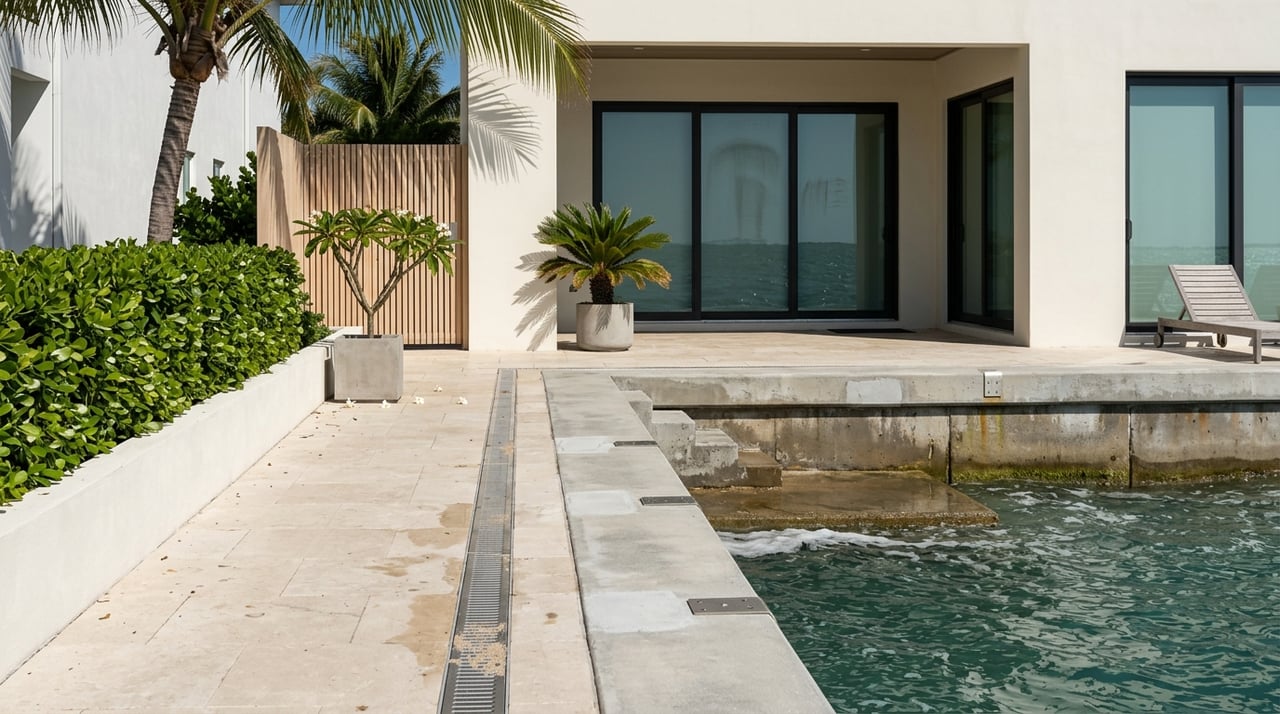
Kahala Diamond Head Oceanfront Home Buying Guide
April 16, 2026
April 16, 2026
Buying oceanfront in Kahala-Diamond Head can feel like a dream come true, but the view is only part of the story. In this stretch of Honolulu, what matters just as much is what sits on the map, in the permit file, and along the shoreline boundary. If you are thinking about buying here, understanding the rules and risks early can help you make a more confident decision and avoid costly surprises. Let’s dive in.
With oceanfront property in Diamond Head and nearby Kahala, the biggest questions often go beyond design, finishes, or lot size. A home may appear secure today while still being affected by shoreline rules, flood exposure, sea-level-rise planning areas, or limits on future improvements.
That is especially important in Hawaiʻi, where coastal hazards are a growing concern. According to the State of Hawaiʻi climate resources on sea level rise, 70% of Hawaiʻi beaches are threatened, 13 miles of beaches have already been lost to shoreline hardening, and sea-level rise is expected to intensify erosion, chronic flooding, and wave overtopping.
Before you focus on upgrades or renovation ideas, confirm exactly where the legal shoreline sits. In Hawaiʻi, the certified shoreline is the legal baseline used to measure setbacks and helps define the line between the State Conservation District and the county Special Management Area.
This matters because the certified shoreline is not just a technical detail. It can directly affect what can be built, repaired, or maintained on the property, and it also plays a role in preserving public shoreline transit access.
If you are evaluating an oceanfront parcel, ask for a current shoreline survey or certification as part of your early due diligence. This helps you confirm whether the lot is truly oceanfront in a legal and practical sense, not just based on marketing language or what appears on site.
A current certification can also help you understand whether existing improvements sit in areas that may create issues later. That includes accessory structures, shoreline features, or older improvements near the water.
Honolulu’s shoreline setback rules can significantly affect what you can do with an oceanfront property. Under the City and County of Honolulu shoreline setback ordinance, setback formulas vary by parcel location.
In the Primary Urban Center, the rule is generally 60 feet mauka from the certified shoreline. In other development-plan areas, the setback is generally 60 feet plus 70 times the annual coastal erosion rate, up to 130 feet.
These rules can shape whether you can expand the home, add features, or rebuild after major damage. Within the shoreline setback area, structures and activities are generally prohibited unless they qualify for narrow exceptions, such as certain minor non-hardening structures, maintenance, restoration, or public shoreline-dependent facilities.
In some cases, the city can also require removal if a minor structure later affects beach processes or ends up seaward of the shoreline. For you as a buyer, that means existing improvements should never be assumed to be permanent or fully compliant without verification.
One of the most important questions with any oceanfront property is whether existing shoreline protection is legal and whether future hardening is realistic. Buyers sometimes see a seawall, revetment, or similar structure and assume it solves the erosion issue. In practice, that assumption can create real risk.
According to Hawaiʻi law, shoreline-area structures generally need a variance unless an exception applies, and a city or state permit alone is not automatically a shoreline variance. Violations can also lead to removal orders and civil fines under state enforcement rules.
New hardening is heavily constrained, and replacement or expansion may not be straightforward. Honolulu’s rules are narrow, and the broader coastal policy in Hawaiʻi recognizes that hard structures like seawalls, groins, and revetments can worsen sand loss on nearby shoreline areas.
The DLNR Coastal Lands Program notes that restoration approaches, including beach and dune restoration and small-scale nourishment, may be considered as alternatives to hard armoring. That does not make every site easy to protect, but it does show why buyers should review the permit history before relying on any existing shoreline structure.
Sea-level-rise disclosure is now part of Hawaiʻi real estate transactions, so this should come up at the beginning of your purchase process, not near closing. The state’s sea-level-rise resources make clear that this issue belongs in the conversation early.
The state also advises planners to use the Hawaiʻi Sea Level Rise Viewer flowchart and guidance, which treats the Sea Level Rise Exposure Area, or SLR-XA, as a conservative estimate. The 3.2-foot scenario is the planning benchmark for most development, and if any part of a site falls within the SLR-XA, development may be at risk.
If you are comparing two oceanfront homes in Diamond Head or Kahala, sea-level-rise exposure may affect more than future construction. It can shape insurability, renovation strategy, holding costs, and eventual resale.
For that reason, one of the smartest pre-offer steps is checking the property in the Sea Level Rise Viewer and discussing what that means for your intended use of the property. If your plans include updates, additions, or long-term legacy ownership, this is especially important.
Many buyers assume that if they purchase an oceanfront home, they can modernize it later without too much difficulty. On Oʻahu, that can be a risky assumption because shoreline and Special Management Area rules may affect even routine-looking projects.
Under Honolulu rules, the Special Management Area runs from the mauka boundary shown on official maps to the shoreline, and all development there is subject to review. A minor SMA permit may apply for projects up to $500,000 if there is no significant adverse environmental effect, while larger or more impactful projects may require a major permit approved by council resolution.
This is particularly important if the property includes older improvements close to the shoreline. Honolulu’s shoreline ordinance states that nonconforming shoreline structures may be repaired or altered only if the nonconformity is not increased.
If a nonconforming structure is destroyed by more than 50%, it generally may not be reconstructed unless it conforms to current rules. For you as a buyer, that can be a major issue if you are purchasing with a renovation or rebuild strategy in mind.
Oceanfront buyers often value privacy, but some property changes near the shoreline involve a public review process. If a project needs a shoreline setback variance, the application requires notice to abutting owners, neighborhood boards, and community associations, along with a public hearing under Honolulu’s shoreline rules.
That means certain privacy-focused improvements could still become part of a public process. If discretion matters to you, it is worth understanding this before you commit to a property with major shoreline-related plans.
Insurance is another area where oceanfront buyers should avoid assumptions. In Hawaiʻi, hurricane insurance covers wind damage, not storm surge, and Hawaiʻi Emergency Management notes that flood and wind are separate conversations.
FEMA also explains that most homeowners insurance does not cover flood damage, and flood insurance is typically a separate policy. Because the National Flood Insurance Program is available statewide, buyers should evaluate coverage options early.
Flood coverage often comes with a waiting period. That is why insurance planning should start early in escrow rather than just before closing.
If private homeowners or dwelling-fire coverage is difficult to place, the Hawaiʻi Property Insurance Association states that applicants who cannot obtain private coverage may qualify through a licensed insurance agent. This can be an important backup path for some coastal properties.
Before you write an offer on an oceanfront home in Kahala-Diamond Head, it helps to look past the view and build a clear due diligence checklist. The goal is to understand not just the property as it looks today, but also how it may function under current regulations and environmental conditions.
A practical checklist may include:
DLNR’s coastal lands guidance specifically advises buyers to ask these questions. If no erosion rate exists for the parcel, DLNR’s coastal real estate guide recommends a hazard assessment and historical shoreline analysis rather than relying on appearances alone.
Buying oceanfront in Diamond Head is not just about finding the right house. It is about understanding the legal shoreline, future exposure, insurance path, and what the property can realistically support over time.
With high-value coastal real estate, careful guidance can help you ask better questions before you commit. If you are exploring oceanfront opportunities in Diamond Head, connect with Chelsey Flanagan for thoughtful, locally rooted guidance through every step of the process.
Stay up to date on the latest real estate trends.
From personalized search criteria, email updates for new or changed listings, community and school demographics, satellite map searches to free market reports, forms, and updated real estate news. Feel free to contact me and I will be happy to help you with all your real estate needs.