Your Niu Valley Family Neighborhood Guide to Daily Life
May 14, 2026
May 14, 2026
Looking for a Honolulu neighborhood that feels a little calmer without putting you far from daily essentials? If you are searching for more space, nearby parks, and a practical school path, Niu Valley often stands out for exactly those reasons. This East Honolulu neighborhood has a long-established residential layout, local recreation close to home, and a quieter everyday rhythm that many buyers appreciate. Let’s take a closer look.
Niu Valley is one of East Honolulu’s long-established residential valleys. Historic planning material places its major development between 1953 and 1965, alongside other east-side suburban communities such as Kahala, ʻĀina Haina, and Hawaiʻi Kai.
That history still shows up in how the neighborhood functions today. Early sections were laid out in a more grid-like pattern, while later phases added curving streets and cul-de-sacs. Retail activity also clustered at Niu Valley Center on Kalanianaʻole Highway, which helps keep much of the neighborhood more residential in feel.
For you as a buyer, that often translates into a lower-key pace. Instead of a more commercial street pattern, Niu Valley offers a setting where homes, local parks, and everyday routines tend to feel more tucked into the valley.
For many buyers, schools are a major part of the home search. In Niu Valley, one of the most notable features is that the neighborhood has its own public middle school.
Niu Valley Middle is located at 310 Halemaumau Street and serves grades 6 through 8 in the Farrington-Kaiser-Kalani complex area. Having a neighborhood namesake middle school is part of what makes Niu Valley easy to understand for many families exploring East Honolulu.
ʻĀina Haina Elementary is a nearby public elementary school serving pre-kindergarten through 5th grade. It is located at 801 West Hind Drive and is also part of the Farrington-Kaiser-Kalani complex area.
Kaiser High is the feeder high school identified in Department of Education materials for Niu Valley Middle. It serves grades 9 through 12 at 511 Lunalilo Home Road, and the DOE profile describes it as an International Baccalaureate World School.
If you are considering a specific property, it is smart to verify school assignments directly by address. The Hawaiʻi Department of Education offers a SchoolSite Locator that allows you to enter a street address and check the assigned elementary, middle, and high schools.
DOE also notes that the locator is for reference only and should not be the sole basis for a relocation or purchase decision. In practice, that means it is helpful to confirm details early while you narrow your options.
One reason Niu Valley appeals to many households is how easy it is to build outdoor time into your week. You are not relying on one large destination park alone. Instead, you have a mix of neighborhood-scale options in the surrounding area.
Niu Valley Neighborhood Park is located at 5510 Kanau Street. The City and County of Honolulu lists two tennis courts at the park, giving residents a convenient local recreation option without leaving the neighborhood.
Other nearby city facilities include ʻĀina Haina Community Park and Kuliouʻou Neighborhood Park. Together, these parks add to the day-to-day flexibility of living in this part of East Honolulu.
Whether your routine includes a quick park stop, time outdoors after school, or weekend activities closer to home, these nearby facilities help support that lifestyle.
Living in Niu Valley also means shoreline recreation is within the broader East Honolulu routine. Honolulu Emergency Services has referenced Kawaikui Beach Park in ocean-safety reporting, and neighborhood-board materials for the same corridor discuss city beach parks including Wailupe Beach Park, Kawaiku‘i Park, Kuliouʻou Park, and Kāhala.
For you, that does not mean every outing has to be a major trip. It means beach access and shoreline time can be part of normal life in this side of town, whether you enjoy paddling, walking near the water, or spending time outdoors on weekends.
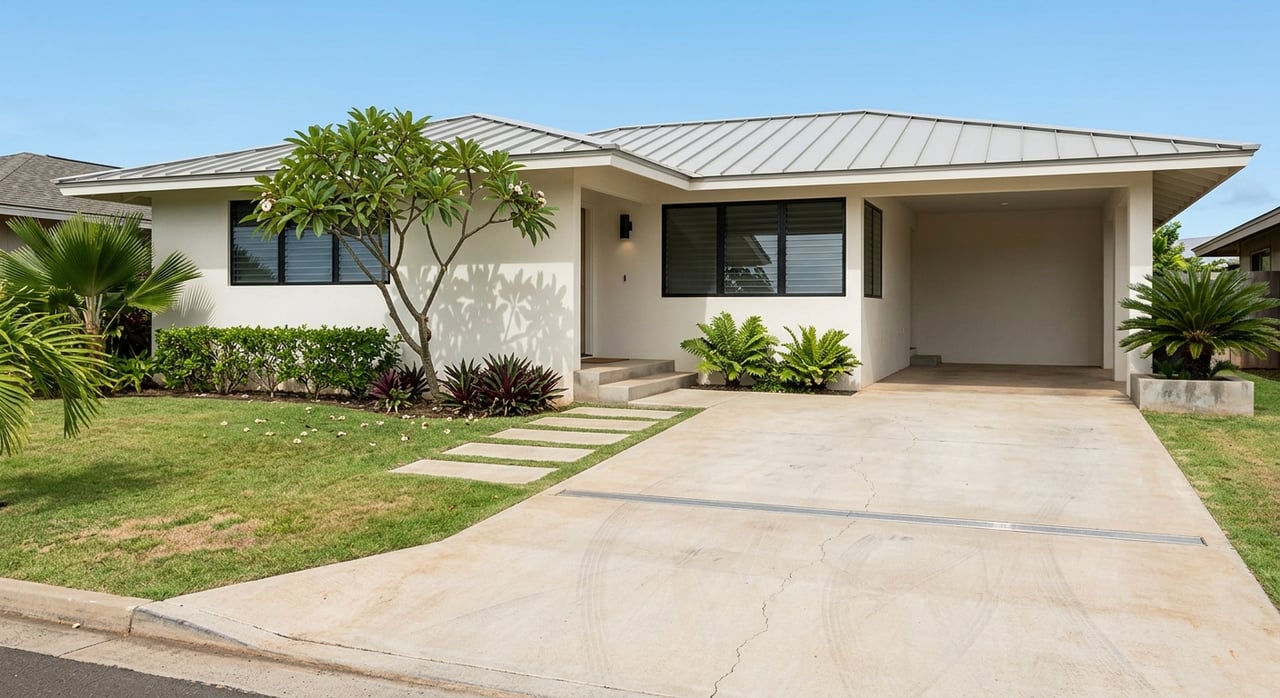
Niu Valley’s housing story is another reason the neighborhood feels distinct. Historic Hawaiʻi Foundation material says the area was developed in six major increments between 1953 and 1965, with planned lot sizes generally ranging from 7,500 to 15,000 square feet.
That subdivision history points to a detached-home neighborhood with more lot space and architectural variety than more condo-heavy parts of Honolulu. It is an inference from the neighborhood’s development pattern, not a formal zoning statement, but it helps explain why many buyers experience Niu Valley as a place with a bit more breathing room.
The same historic study describes a mix of architects, an early all-concrete-block model house, many homes with Asian styling, and later phases with more curving street layouts. Over time, many properties have also been modified.
As a result, Niu Valley does not tend to feel uniform. You are more likely to see a blend of original mid-century character, updated homes, and rebuilt residences rather than one repeated look.
If your priority is finding an East Honolulu neighborhood with a calmer layout and practical everyday amenities, Niu Valley checks several important boxes. It combines a built-in middle school, nearby elementary school options in the same complex area, neighborhood parks, and close shoreline access.
Just as important, the street pattern and retail clustering support a quieter pace. For many buyers, that balance matters: you can stay in East Honolulu while enjoying a more residential setting and more space than you may find elsewhere.
Every buyer defines “family-friendly” a little differently. For some, it means being near a public middle school. For others, it means easy park access, a detached home setting, or a neighborhood that feels less rushed day to day.
As you compare homes in Niu Valley, it helps to focus on the details that shape daily life most:
When you look at Niu Valley through that lens, the neighborhood’s appeal becomes easier to see. It is not just about one feature. It is about how schools, parks, home styles, and neighborhood layout work together.
If you are weighing Niu Valley against nearby parts of East Honolulu, having local guidance can make the comparison much clearer. Chelsey Flanagan brings deep Southeast Oʻahu knowledge and a relationship-first approach to helping you find the right fit for your next move.
Stay up to date on the latest real estate trends.
From personalized search criteria, email updates for new or changed listings, community and school demographics, satellite map searches to free market reports, forms, and updated real estate news. Feel free to contact me and I will be happy to help you with all your real estate needs.